I Dropped a Swirly Bulb. Here's the Cleanup EPA Actually Wants
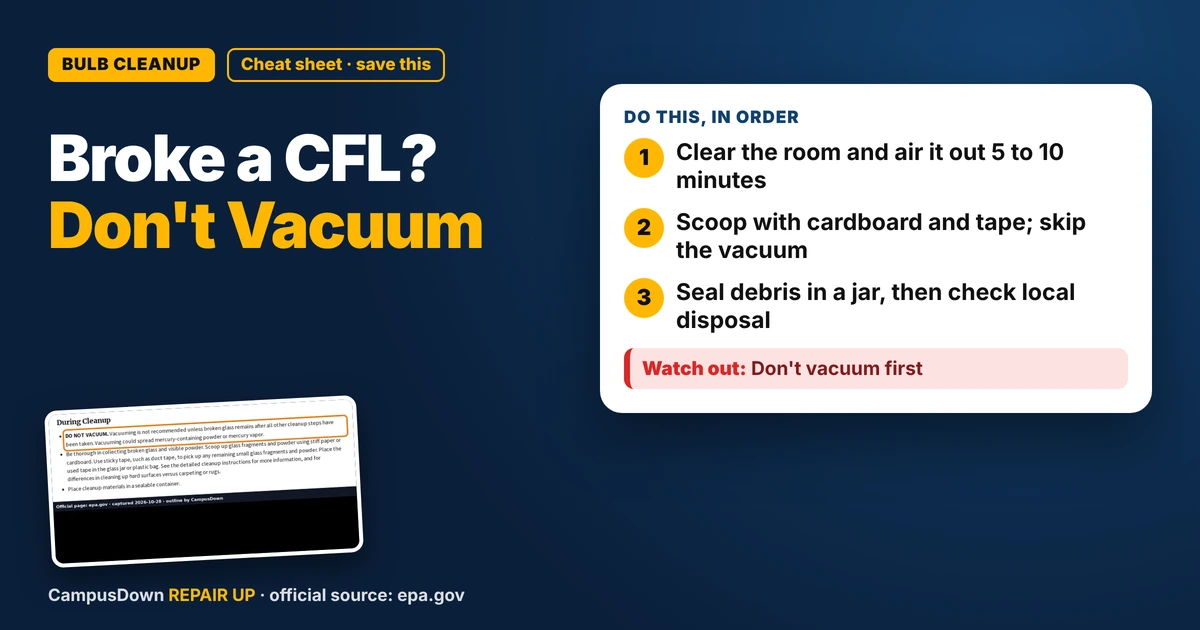
Broken CFL bulb cleanup, step by step: air out the room, skip the vacuum, scoop with cardboard, use tape, seal it up, and check local disposal rules.
“Almost cried fixing my own house. Learned to read every quote instead.”
Theology · Scripture Cards
Open a scripture card
Already read and shared by 315 people.
 Your Faith Has Made You Well
Mark 10:52
Jesus said to him, “Go your way. Your faith has made you well.” Immediately he received his sight and followed Jesus on the way.
Read this card
 I Am with You
Genesis 28:15
Behold, I am with you, and will keep you, wherever you go, and will bring you again into this land. For I will not leave you until I have…
Read this card
 Meant for Good
Genesis 50:20
As for you, you meant evil against me, but God meant it for good, to save many people alive, as is happening today.
Read this card
 Listen to Him
Matthew 17:5
While he was still speaking, behold, a bright cloud overshadowed them. Behold, a voice came out of the cloud, saying, “This is my beloved…
Read this card
 I Am with You Always
Matthew 28:20
teaching them to observe all things that I commanded you. Behold, I am with you always, even to the end of the age.” Amen.
Read this card
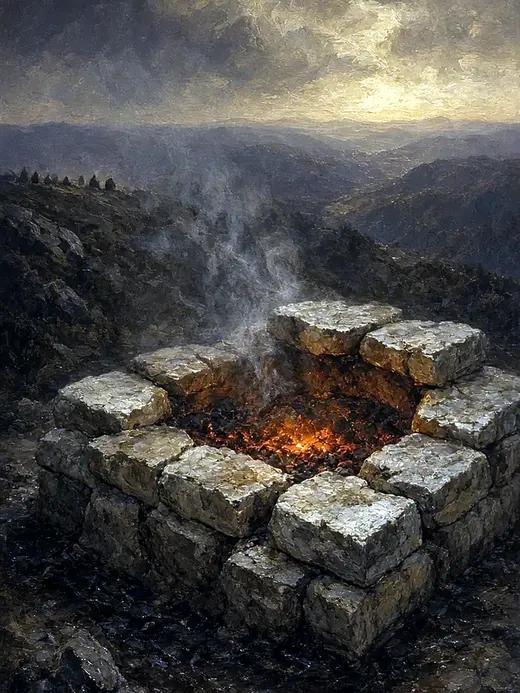 The Lord, He Is God
1 Kings 18:38-39
Then Yahweh’s fire fell and consumed the burnt offering, the wood, the stones, and the dust; and it licked up the water that was in the…
Read this card
 For Such a Time as This
Esther 4:14
For if you remain silent now, then relief and deliverance will come to the Jews from another place, but you and your father’s house will…
Read this card
 Be Strong and Courageous
Joshua 1:9
Haven’t I commanded you? Be strong and courageous. Don’t be afraid. Don’t be dismayed, for Yahweh your God is with you wherever you go.”
Read this card
Key Takeaways
- Clear the room and air it out 5 to 10 minutes
- Scoop with cardboard and tape; skip the vacuum
- Seal debris in a jar, then check local disposal
Old apartments love those swirly bulbs. Then one day you're changing one while standing on a wobbly chair, it slips, and now there's glass and white powder on the floor. Before you grab the vacuum on instinct, here's the broken CFL bulb cleanup EPA recommends, because those bulbs contain a small amount of mercury.
Before you touch anything
EPA's page on cleaning up a broken CFL starts with three moves:
- Get people and pets out of the room, and avoid stepping through the breakage on the way out.
- Open a window or door to the outside and leave the room for 5 to 10 minutes.
- If you have central forced-air heating or AC, shut it off.
Then gather supplies: stiff paper or cardboard, sticky tape like duct tape, damp paper towels or wet wipes for hard floors, and a glass jar with a metal lid or a sealable plastic bag.
The cleanup itself
On a hard floor, scoop the glass and powder with the cardboard and put it in the jar or bag. Use tape to pick up the tiny bits. Wipe the spot with damp paper towels and put those in too.
On carpet or a rug it's mostly the same, minus the wiping: scoop, then tape.
The big one: don't vacuum. EPA says vacuuming isn't recommended unless broken glass is still there after all the other steps, because it could spread mercury-containing powder or vapor. If you truly have to vacuum leftover glass, EPA says keep a window open, use the hose, then seal the vacuum bag or canister debris in a plastic bag.
Getting rid of it
EPA says to put all the debris and cleanup materials outside in a trash container or a protected area until disposal. Then check your local government's rules, because some places require fluorescent bulbs, broken or not, to go to a recycling center. If there's no local requirement, EPA says the bagged debris can go out with household trash.
Wash your hands after. If practical, keep airing out the room and leave the HVAC off for several hours.
For questions, EPA lists the poison control center number: 1-800-222-1222.
Why everyone's instinct is wrong here
Vacuums are our default "make the mess disappear" button, so grabbing one feels responsible. That's a habit, not a decision. The availability heuristic means you remember a thousand times vacuuming glass worked fine, so it feels safe here too.
There's also a tiny bit of allergic rhinitis and asthma logic: if you or a roommate already has sensitive airways, kicking dust and powder into the air is never a great plan. Your immune system has enough going on during finals.
Preventing round two
EPA suggests putting down a drop cloth, like a plastic sheet or beach towel, when changing fluorescent bulbs, so if one breaks the cloth catches it and can be bundled up with the debris.
Other cheap habits:
- Change bulbs from a stable step stool, not a rolling desk chair.
- Let a bulb cool before you twist it out.
- Ask your landlord about swapping the fixture's bulbs to LEDs when they burn out. If the lease says bulbs are your job, LEDs are less fragile to deal with.
What if you already vacuumed?
It happens. EPA's page has a section for people who couldn't follow all the steps or already cleaned up the wrong way. Read that part, air the room out, and don't spiral. Next time you'll know.
If this saved you a headache, it might save a friend one too.
Pick an app — it just sends the link, nothing else.
Frequently Asked Questions
Is a broken CFL bulb dangerous?
CFLs contain a small amount of mercury, so EPA recommends specific cleanup steps: air out the room, don't vacuum first, and seal the debris.
Can I vacuum a broken CFL?
EPA says not unless glass remains after scooping and taping, because vacuuming can spread mercury powder or vapor.
How do I throw away a broken CFL?
Put sealed debris outside, then check local rules. Some places require fluorescent bulbs to go to a recycling center.
What if I already cleaned it up wrong?
EPA's page has a section for this. Air out the room and follow its guidance.