Home Maintenance Checklist
- Best for
- Homeowners · First-time buyers · Landlords
- When to use
- At the start of each season, or right after you move in, to catch small problems before they turn into repairs.
Download free
- Download PDF.pdf · 4 KB
- Download Excel.xlsx · 7 KB
No sign-up or email needed. Free for personal and business use; please don't resell the file itself.
How to use this checklist
- Print the PDF and keep it somewhere you'll see it, or open the Excel file and save a copy for your home.
- Cross out tasks that don't apply (no fireplace, no sump pump) and add anything specific to your house.
- At the start of each month and season, work through that section and write the date you finished each task.
- Write down anything that looks off, such as stains, cracks or new noises. Small notes now make it easier to explain the problem to a pro later.
- Follow the instructions from your equipment's manufacturer. They come first when they differ from this general list.
What's inside
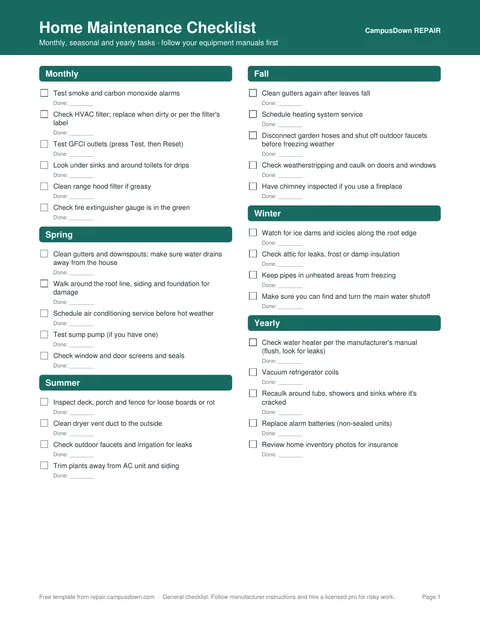
- Monthly: smoke and CO alarm tests, HVAC filter check, GFCI outlet test, quick leak check under sinks
- Spring: gutters, roof and siding walk-around, AC service, sump pump test, window and door seals
- Summer: deck and fence check, dryer vent cleaning, outdoor faucet and irrigation check
- Fall: gutters again, heating service, disconnect hoses before freezing weather, weatherstripping
- Winter: watch for ice dams and frozen pipes, check attic for leaks, test the main water shutoff
- Yearly: water heater check, fire extinguisher check, refrigerator coils, caulk around tubs and showers
- Excel tracker with columns for frequency, last done, next due and notes
Why a routine pays off
Maintenance is boring, and that's the point. Most expensive repairs start as small problems that nobody looked at: an overflowing gutter that soaks the foundation, a dryer vent full of lint, a slow drip under a sink. Ten minutes a month catches a lot of them.
If you do find water damage, read how to document water damage before you start cleaning up.
Safety: Skip tasks that need a ladder on the roof, gas appliances or electrical panels unless you are qualified. Those are jobs for a licensed professional.