Picking a Dehumidifier Size After My Apartment Leak
Room still damp after a leak? ENERGY STAR's sizing chart in pints per day, why bigger beats smaller, and the cold-room and drain-hose safety tips to know.
“Almost cried fixing my own house. Learned to read every quote instead.”
Theology · Scripture Cards
Open a scripture card
Already read and shared by 315 people.
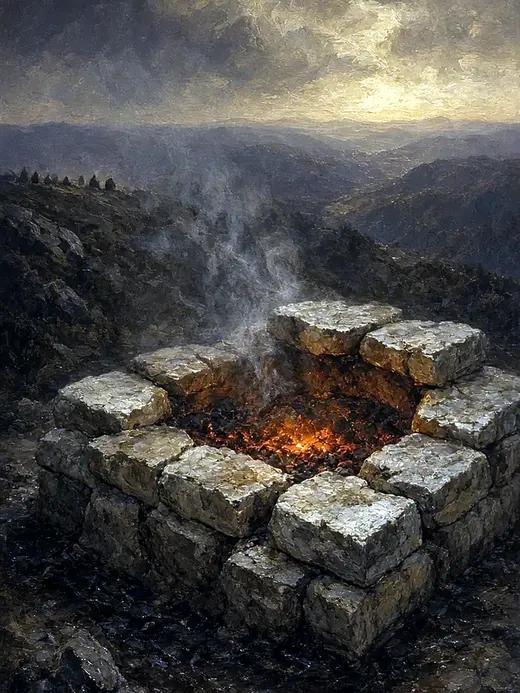 The Lord, He Is God
1 Kings 18:38-39
Then Yahweh’s fire fell and consumed the burnt offering, the wood, the stones, and the dust; and it licked up the water that was in the…
Read this card
 Meant for Good
Genesis 50:20
As for you, you meant evil against me, but God meant it for good, to save many people alive, as is happening today.
Read this card
 The God Who Brought You Out
Exodus 20:2
“I am Yahweh your God, who brought you out of the land of Egypt, out of the house of bondage.
Read this card
 The Jar Was Not Empty
1 Kings 17:14, 16
For Yahweh, the God of Israel, says, ‘The jar of meal will not run out, and the jar of oil will not fail, until the day that Yahweh sends…
Read this card
 Bread from Heaven
Exodus 16:4
Then Yahweh said to Moses, “Behold, I will rain bread from the sky for you, and the people shall go out and gather a day’s portion every…
Read this card
 A Fourth Walking in the Fire
Daniel 3:25
He answered, “Look, I see four men loose, walking in the middle of the fire, and they are unharmed. The appearance of the fourth is like a…
Read this card
 This Is My Beloved Son
Matthew 3:16-17
Jesus, when he was baptized, went up directly from the water: and behold, the heavens were opened to him. He saw the Spirit of God…
Read this card
 Your God, My God
Ruth 1:16
Ruth said, “Don’t urge me to leave you, and to return from following you, for where you go, I will go; and where you stay, I will stay.…
Read this card
Key Takeaways
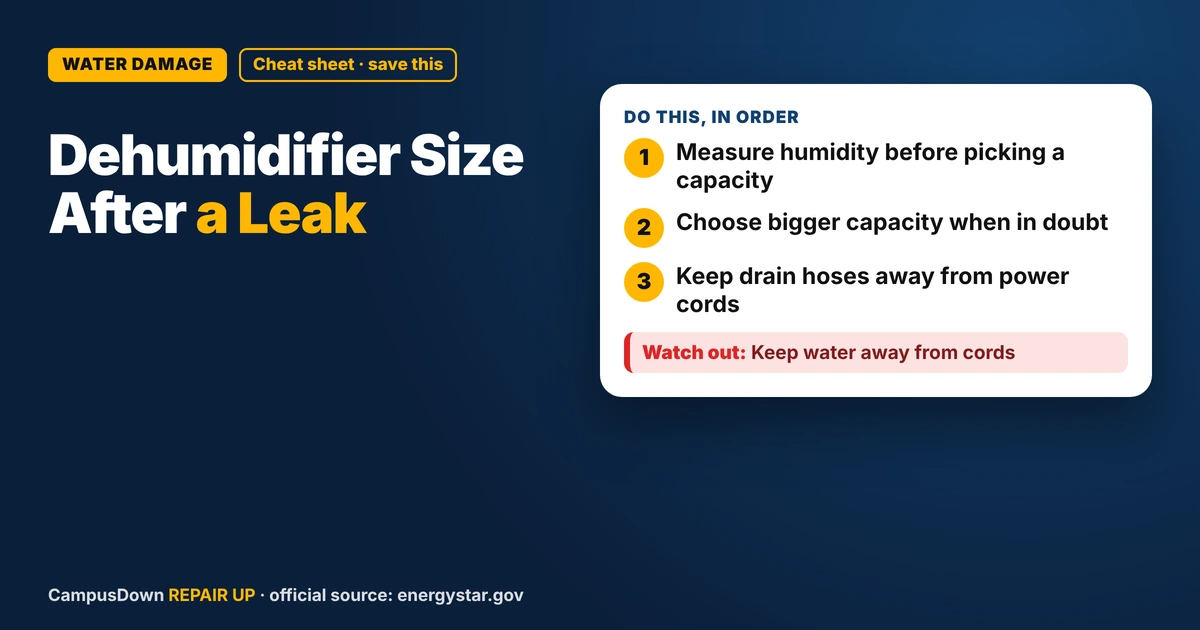
- Measure humidity before picking a capacity
- Choose bigger capacity when in doubt
- Keep drain hoses away from power cords
After a leak, the water you can see is the easy part. The part that drives you nuts is the swampy air that hangs around afterward, the damp-sock smell, the window that fogs up every morning. A dehumidifier is the classic fix, but the boxes at the store all shout numbers at you. If you're asking what size dehumidifier after a leak makes sense, ENERGY STAR has a chart, and it's simpler than the marketing.
How "size" works
ENERGY STAR's dehumidifier page says a dehumidifier's size, or capacity, is usually measured in pints per 24 hours, meaning how much water it pulls from the air in a day. It's not the size of the box or the bucket.
The same page gives the most useful tip on the whole topic: it's better to oversize than undersize.
ENERGY STAR's minimum-capacity chart
ENERGY STAR's chart for portable units estimates minimum capacity by how damp the space is:
- Slightly to moderately damp (50–75% relative humidity): 20–30 pints per day for a small-to-medium space, 30+ for a large one.
- Very damp (75–90% RH): 25–40 pints, or 40+ for large spaces.
- Wet (90–100% RH): 30–50 pints, or 50+ for large spaces.
Right after a leak, your room may lean toward the damp end. A cheap hygrometer helps you see which row you're in instead of guessing from the smell. I'm not quoting any price here; check current listings yourself.
Cold rooms and frost
ENERGY STAR notes frost can form on the coils if air drops below 65°F, which can make the compressor cycle without removing moisture. If your space is usually colder than that, consider a model specified for lower temperatures. If frost happens, the page says to switch the unit off and let it defrost before restarting.
Bucket or hose
Many portable units, per ENERGY STAR, have a full-bucket warning light and typically an automatic shutoff so the bucket doesn't overflow. Some let you attach a hose to a floor drain. If you use a hose, ENERGY STAR says keep the unit close enough to the drain to avoid a long, unwieldy hose.
The renter angle
If the leak came from the building, the landlord should hear about it in writing, with photos. A dehumidifier helps the air; it doesn't replace fixing the source or checking walls for hidden moisture.
Why we buy too small
The cheaper box always looks tempting, but mental accounting ignores the cost of a unit that runs forever and never catches up. Optimism bias says the room is "only a little damp," and the planning fallacy assumes drying will take a weekend. ENERGY STAR's oversize advice is basically a cure for all three.
Know someone staring at a repair right now? Send this their way.
Pick an app — it just sends the link, nothing else.
Frequently Asked Questions
How is dehumidifier size measured?
ENERGY STAR says capacity is usually measured in pints of water removed per 24 hours.
Is it better to buy a bigger dehumidifier?
ENERGY STAR says it's better to oversize than undersize.
What size dehumidifier for a very damp room?
ENERGY STAR's chart suggests 25–40 pints per day for a small-to-medium very damp space, 40+ for large.
Can a dehumidifier work in a cold room?
Frost can form below 65°F; ENERGY STAR suggests a model specified for lower temperatures.