Frayed Phone Charger Cable: Should You Keep Using It?
Charger cable fraying near the plug? Learn why damage matters, what NFPA says about lithium-ion batteries, safer charging habits, and when to buy a new cable.
“Almost cried fixing my own house. Learned to read every quote instead.”
Theology · Scripture Cards
Open a scripture card
Already read and shared by 315 people.
 My Heart Rejoices in the Lord
1 Samuel 2:1-2
Hannah prayed, and said, “My heart exults in Yahweh! My horn is exalted in Yahweh. My mouth is enlarged over my enemies, because I rejoice…
Read this card
 The Lord, He Is God
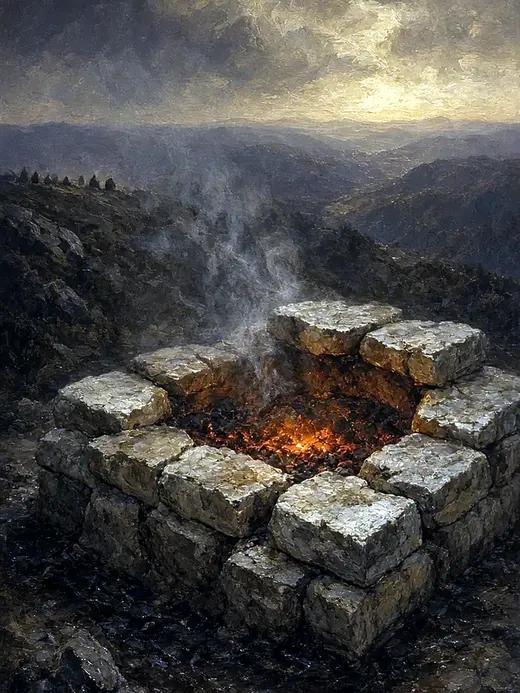
1 Kings 18:38-39
Then Yahweh’s fire fell and consumed the burnt offering, the wood, the stones, and the dust; and it licked up the water that was in the…
Read this card
 This Is My Beloved Son
Matthew 3:16-17
Jesus, when he was baptized, went up directly from the water: and behold, the heavens were opened to him. He saw the Spirit of God…
Read this card
 He Revealed His Glory
John 2:11
This beginning of his signs Jesus did in Cana of Galilee, and revealed his glory; and his disciples believed in him.
Read this card
 I Know That My Redeemer Lives
Job 19:25
But as for me, I know that my Redeemer lives. In the end, he will stand upon the earth.
Read this card
 His Flesh Was Restored
2 Kings 5:14
Then he went down and dipped himself seven times in the Jordan, according to the saying of the man of God; and his flesh was restored like…
Read this card
 The Kingdom Belongs to Such as These
Mark 10:14, 16
But when Jesus saw it, he was moved with indignation and said to them, “Allow the little children to come to me! Don’t forbid them, for…
Read this card
 Listen to Him
Matthew 17:5
While he was still speaking, behold, a bright cloud overshadowed them. Behold, a voice came out of the cloud, saying, “This is my beloved…
Read this card
Key Takeaways
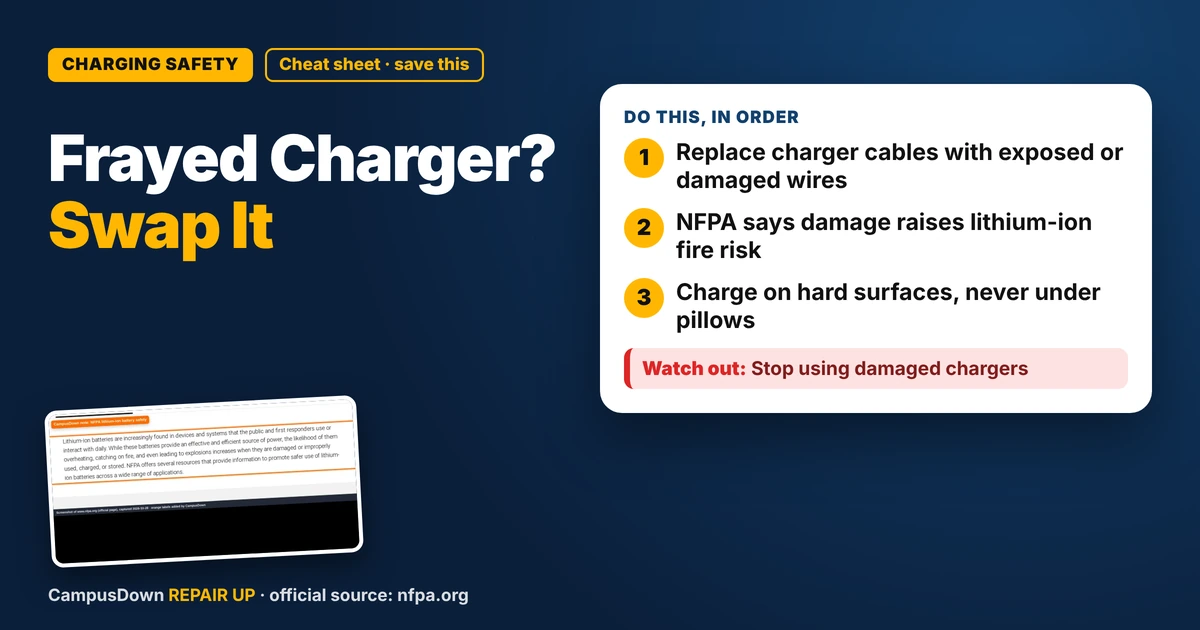
- Replace charger cables with exposed or damaged wires
- NFPA says damage raises lithium-ion fire risk
- Charge on hard surfaces, never under pillows
My phone charger cable has been held together by hope and a hair tie for months. The rubber near the connector split, and I could see wires peeking out. I kept using it because buying a new one felt like admitting defeat. Is a frayed phone charger cable a fire risk, or just ugly?
What NFPA says
The NFPA lithium-ion battery safety page says the likelihood of these batteries overheating, catching fire or even exploding increases when they are damaged or improperly used, charged or stored. NFPA also offers a tip sheet on battery storage, charging and disposal, and its Fire Prevention Week campaign focuses on everyday charging habits.
That page is about batteries, not specifically cables. But a damaged cable is part of how you charge, and NFPA clearly cares about charging habits.
Why damage matters
Fire needs heat, fuel and oxygen. A damaged cable can create heat where wires are exposed or partly broken, and bedding, couches and paper are fuel. Charging on a pillow at night stacks up the risk.
Brain bugs
It's easy to think, "I've used it for months, nothing happened." That's normalcy bias. Seeing one viral video of a phone fire can swing you the other way, which is the availability heuristic. The useful middle: damage is a real reason to replace, not panic.
Safer charging habits
- Charge on hard surfaces, not beds or couches.
- Use cables and chargers made for your device, or from reputable brands.
- Unplug cables that get hot or show damage.
- Don't charge under pillows.
- Keep cords away from pets that chew.
Cheap cables
Super-cheap unbranded cables might cut corners. I can't verify any specific brand's safety, but buying from known makers and looking for a recognized testing lab mark on packaging is a reasonable habit.
Check the brick too
The wall adapter matters as much as the cable. If the plug part gets hot to the touch, has a cracked case, smells odd or makes a whining noise, retire it with the cable. Same goes for wireless pads that heat up more than usual. And give your phone some breathing room while it charges, because a thick case plus a blanket traps warmth.
Hypothetical
Hypothetical: your cable frays but still charges fine, with no heat or sparks. It may keep working for a while, but the damage can get worse, and you won't know when it crosses into dangerous. Replacing it is the cheap insurance.
Disposing of the old one
Cables can usually go to electronics recycling. Batteries are different: don't toss damaged lithium-ion batteries in household trash, and follow local disposal rules.
Know someone staring at a repair right now? Send this their way.
Pick an app — it just sends the link, nothing else.
Frequently Asked Questions
Is a frayed phone charger dangerous?
Damage can create heat or sparks. Replace damaged cables.
What does NFPA say about lithium-ion batteries?
Damage or improper use, charging or storage increases the risk of overheating and fire.
Can I tape a frayed charger cable?
Tape isn't a reliable fix. Replace the cable.
Where should I charge my phone?
On a hard surface, not on a bed or under a pillow.