My Tiny Kitchen Gets Stuffy Every Time I Cook on the Gas Stove
Gas stove ventilation in a small apartment kitchen matters. Use the hood, open a window, keep a CO alarm, and know the signs that mean leave and call for help.
“Almost cried fixing my own house. Learned to read every quote instead.”
Theology · Scripture Cards
Open a scripture card
Already read and shared by 315 people.
 Salvation Is of the Lord
Jonah 2:6, 9
I went down to the bottoms of the mountains. The earth barred me in forever; yet you have brought my life up from the pit, Yahweh my God. ……
Read this card
 God Shut the Lions’ Mouths
Daniel 6:22
My God has sent his angel, and has shut the lions’ mouths, and they have not hurt me, because innocence was found in me before him; and…
Read this card
 The God Who Brought You Out
Exodus 20:2
“I am Yahweh your God, who brought you out of the land of Egypt, out of the house of bondage.
Read this card
 He Revealed His Glory
John 2:11
This beginning of his signs Jesus did in Cana of Galilee, and revealed his glory; and his disciples believed in him.
Read this card
 This Is My Beloved Son
Matthew 3:16-17
Jesus, when he was baptized, went up directly from the water: and behold, the heavens were opened to him. He saw the Spirit of God…
Read this card
 Unto Us a Child Is Born
Isaiah 9:6
For a child is born to us. A son is given to us; and the government will be on his shoulders. His name will be called Wonderful Counselor…
Read this card
 Be Strong and Courageous
Joshua 1:9
Haven’t I commanded you? Be strong and courageous. Don’t be afraid. Don’t be dismayed, for Yahweh your God is with you wherever you go.”
Read this card
 Surely I Will Be with You
Judges 6:16
Yahweh said to him, “Surely I will be with you, and you shall strike the Midianites as one man.”
Read this card
Key Takeaways
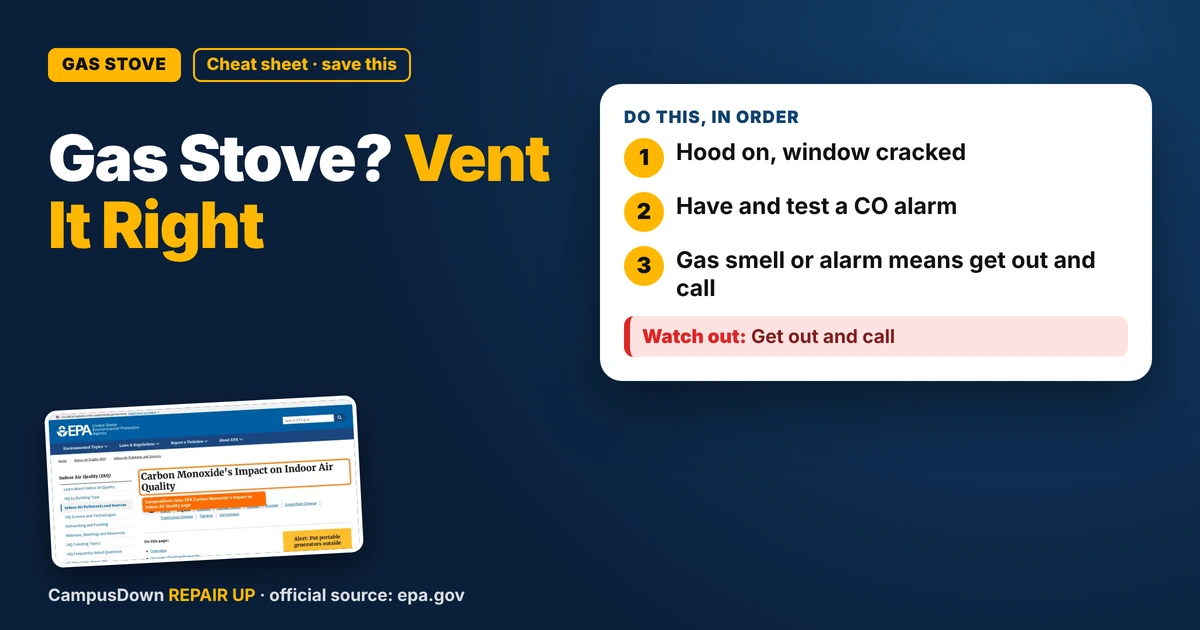
- Hood on, window cracked.
- Have and test a CO alarm.
- Gas smell or alarm means get out and call.
My kitchen is basically a hallway with a stove. When I cook pasta on the gas burners, the whole apartment gets warm and stuffy. If you're looking up gas stove ventilation in a small kitchen, you're asking a good question, because air quality in tiny spaces matters more than we think.
Why ventilation matters with gas
Gas stoves burn fuel. Burning anything can create combustion byproducts, and carbon monoxide is one people worry about when appliances don't vent or work right. In small apartments, those byproducts and cooking moisture have less space to spread out.
Step 1: Use the range hood
- Turn the hood fan on before you start cooking.
- Leave it running a bit after you finish.
- Use the back burners when you can; hoods often capture better there.
- Clean the hood filter so it can actually pull air.
Step 2: Open a window
If there's no hood or it just recirculates air, crack a window while cooking. Even a little airflow helps. A small fan pointed out a window can help push air outside.
Step 3: Have a CO alarm
Make sure there's a working carbon monoxide alarm in your unit if you have gas appliances. Test it. If there isn't one, ask your landlord.
What the EPA says
The EPA page on carbon monoxide's impact on indoor air quality explains sources of CO indoors, including unvented or malfunctioning fuel-burning appliances, and ways to reduce exposure. It's a solid link for a landlord conversation about a hood that doesn't work.
Why I ignored this for months
The stove always worked, so I assumed it was fine. That's normalcy bias. I also thought a hood was just for smoke, which is confirmation bias because I only noticed it when I burned stuff. And thinking "nothing bad will happen in my kitchen" is optimism bias.
When to call maintenance
- The burner flame looks unusual or the stove clicks without lighting.
- The hood fan doesn't work.
- You don't have a CO alarm.
- There's soot around the burners or stove.
Cook smarter in a small space
Lids on pots, hood on, window cracked, and burners off when done. It keeps the kitchen cooler, cuts moisture, and makes cooking less sweaty. Your future dinner guest will appreciate not cooking in a steam room.
If this saved you a headache, it might save a friend one too.
Pick an app — it just sends the link, nothing else.
Frequently Asked Questions
How do I ventilate a gas stove in a small kitchen?
Use the range hood, open a window, use back burners, and keep the hood filter clean.
Do I need a CO alarm with a gas stove?
It's a good idea to have a working CO alarm in homes with fuel-burning appliances. Ask your landlord.
Can I use a gas stove to heat my apartment?
No. Don't use a stove or oven for heating.
What should I do if I smell gas?
Leave right away and call the gas company or 911 from outside.