My Dorm Has Two Outlets and Ten Devices. Here's How I Fixed It Safely
Thinking about plugging a power strip into another power strip in your dorm? Learn why it's risky, safer ways to power your setup, and warning signs.
“Almost cried fixing my own house. Learned to read every quote instead.”
Theology · Scripture Cards
Open a scripture card
Already read and shared by 315 people.
 Twelve Baskets Left Over
John 6:11, 13
Jesus took the loaves, and having given thanks, he distributed to the disciples, and the disciples to those who were sitting down, likewise…
Read this card
 I Will Put Breath in You
Ezekiel 37:5-6
The Lord Yahweh says to these bones: “Behold, I will cause breath to enter into you, and you will live. I will lay sinews on you, and will…
Read this card
 I Am with You
Genesis 28:15
Behold, I am with you, and will keep you, wherever you go, and will bring you again into this land. For I will not leave you until I have…
Read this card
 The Lord Will Fight for You
Exodus 14:13-14
Moses said to the people, “Don’t be afraid. Stand still, and see the salvation of Yahweh, which he will work for you today; for you will…
Read this card
 The Lord Will Provide
Genesis 22:14
Abraham called the name of that place “Yahweh Will Provide”. As it is said to this day, “On Yahweh’s mountain, it will be provided.”
Read this card
 He Revealed His Glory
John 2:11
This beginning of his signs Jesus did in Cana of Galilee, and revealed his glory; and his disciples believed in him.
Read this card
 Surely I Will Be with You
Judges 6:16
Yahweh said to him, “Surely I will be with you, and you shall strike the Midianites as one man.”
Read this card
 The Rainbow Covenant
Genesis 9:13, 16
I set my rainbow in the cloud, and it will be a sign of a covenant between me and the earth. … The rainbow will be in the cloud. I will…
Read this card
Key Takeaways
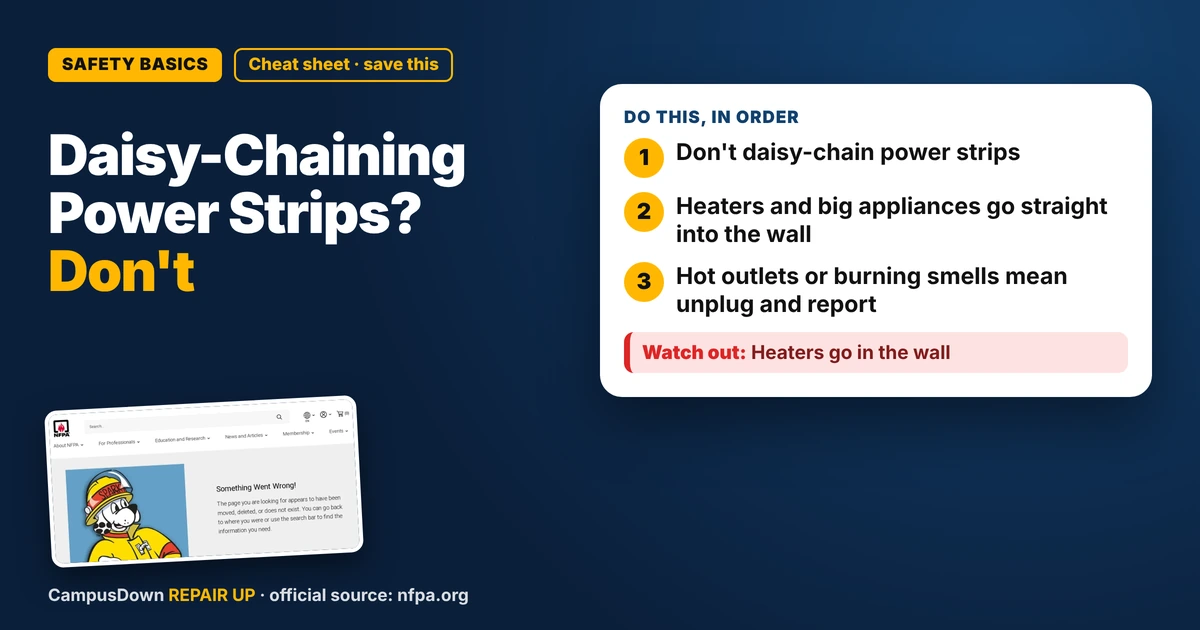
- Don't daisy-chain power strips.
- Heaters and big appliances go straight into the wall.
- Hot outlets or burning smells mean unplug and report.
Laptop, phone, monitor, lamp, mini fridge, gaming setup, and somehow only two outlets. If you're wondering is it safe to plug a power strip into a power strip in your dorm, the short answer from fire safety folks is no. Here's why and what to do instead.
Why daisy-chaining is risky
Plugging one power strip into another is called daisy-chaining. Fire safety organizations warn against it because it can overload the circuit and create a fire risk. The NFPA heating safety page covers space heater safety, a big part of why outlet setups matter in winter.
What uses the most power
Things that heat or cool use a lot of electricity: space heaters, microwaves, mini fridges, hair dryers, and kettles. Common fire safety advice says to plug heaters and major appliances straight into the wall, not into a power strip or extension cord.
Safer setup ideas
- Use one good surge protector* with enough outlets instead of chaining.
- Spread devices across outlets* on different walls if you can.
- Unplug stuff you aren't using,* like chargers and lamps.
- Check your dorm rules.* Many dorms only allow certain types of power strips or ban some appliances.
Warning signs
Stop and unplug if you notice:
- Outlets or cords that feel hot.
- Burning smell.
- Flickering lights when something turns on.
- Breakers tripping often.
- Scorch marks around an outlet.
Report it to your RA or landlord. Electrical problems in walls are not a DIY thing.
We think we're the exception, "my setup is fine." That's optimism bias. And when everyone in the dorm does it, it feels normal. That's the bandwagon effect.
Save money too
Unplugging chargers and turning off devices can lower energy use. If you pay utilities, that matters. Small daily costs feel invisible because of mental accounting, but they add up.
Found this helpful? Share it with a friend who’s dealing with the same mess.
Pick an app — it just sends the link, nothing else.
Frequently Asked Questions
Can I plug a power strip into another power strip?
Fire safety groups warn against it because it can overload the circuit.
Can I plug a space heater into a power strip?
No. Plug heaters directly into a wall outlet.
What are signs of an overloaded outlet?
Hot outlets or cords, burning smells, flickering lights and frequent breaker trips.
What should I do if an outlet feels hot?
Unplug things and report it to your RA or landlord.