How to Make a Successful Water Leak Insurance Claim (Renter Edition)
How to make a successful water leak insurance claim: stop the water, document everything, read your policy, report fast, dry it out and keep every receipt.
“Almost cried fixing my own house. Learned to read every quote instead.”
Theology · Scripture Cards
Open a scripture card
Already read and shared by 315 people.
 Water from the Rock
Exodus 17:6
Behold, I will stand before you there on the rock in Horeb. You shall strike the rock, and water will come out of it, that the people may…
Read this card
 In the Name of the Lord
1 Samuel 17:45, 47
Then David said to the Philistine, “You come to me with a sword, with a spear, and with a javelin; but I come to you in the name of Yahweh…
Read this card
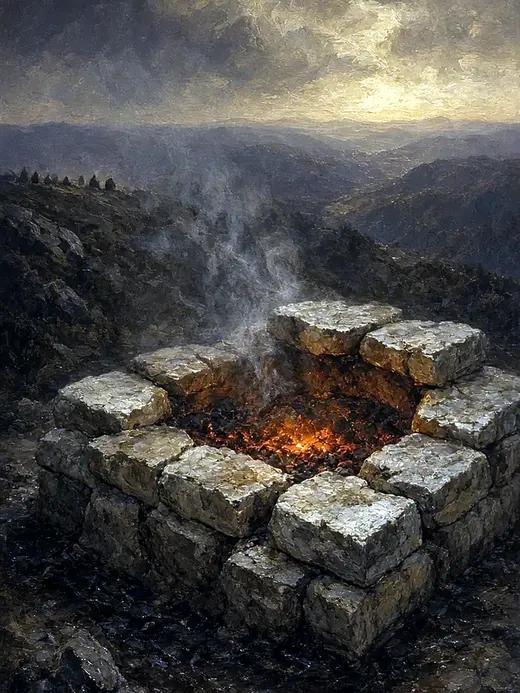 The Lord, He Is God
1 Kings 18:38-39
Then Yahweh’s fire fell and consumed the burnt offering, the wood, the stones, and the dust; and it licked up the water that was in the…
Read this card
 Wings like Eagles
Isaiah 40:31
but those who wait for Yahweh will renew their strength. They will mount up with wings like eagles. They will run, and not be weary. They…
Read this card
 His Flesh Was Restored
2 Kings 5:14
Then he went down and dipped himself seven times in the Jordan, according to the saying of the man of God; and his flesh was restored like…
Read this card
 Listen to Him
Matthew 17:5
While he was still speaking, behold, a bright cloud overshadowed them. Behold, a voice came out of the cloud, saying, “This is my beloved…
Read this card
 Peace, Be Still
Mark 4:39, 41
He awoke and rebuked the wind, and said to the sea, “Peace! Be still!” The wind ceased and there was a great calm. … They were greatly…
Read this card
 Your God, My God
Ruth 1:16
Ruth said, “Don’t urge me to leave you, and to return from following you, for where you go, I will go; and where you stay, I will stay.…
Read this card
Key Takeaways
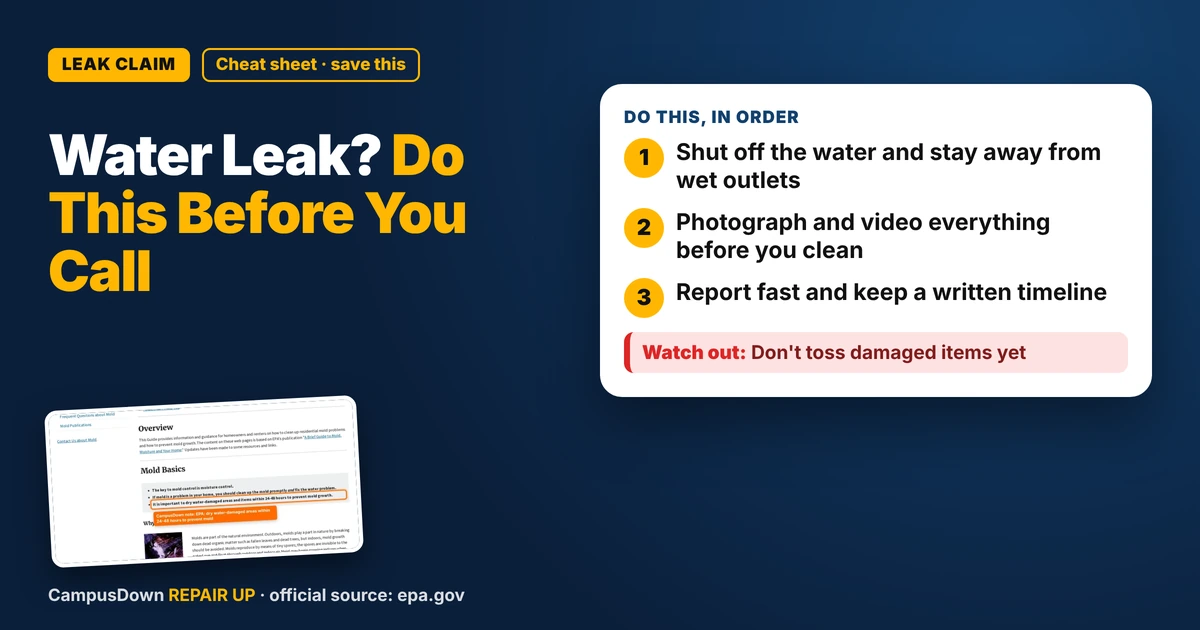
- Shut off the water and stay away from wet outlets.
- Photograph and video everything before you clean.
- Report fast and keep a written timeline.
Picture this: you come home from a late lab, open the door, and your socks immediately get wet. The kitchen floor is a shallow lake and your backpack is floating like it's in a Mr. Beast challenge. Panic is normal. But the next hour decides a lot about how to make a successful water leak insurance claim, because what you do first, and what you write down, matters as much as the policy itself.
I'm not an insurance agent, and every policy is different. What follows is a practical checklist built around what you can control: stopping damage, documenting it, and reading your own policy so you know what to ask.
First hour: stop the water, stay safe
- Shut off the water* at the fixture's valve or the main valve, if you know where it is. If you don't, call your landlord or building emergency line right away.
- Electricity and water don't mix.* If water is near outlets, power strips or appliances, stay away and get help. Don't stand in water to unplug things.
- Move your stuff* to a dry place: laptop, chargers, books, shoes.
- Tell your landlord in writing* (text or email) right away, even if you also call. Note the time.
Document before you clean
This step is where claims get stronger or weaker. Before mopping:
- Take wide photos of each room, then close-ups of damage.
- Shoot a slow video walking through, narrating what you see.
- Photograph the source if you can see it: a burst hose, a dripping pipe, water from the ceiling.
- Photograph damaged items with their brand and model labels.
- Write a short timeline: when you found it, who you contacted, what you did.
Our guide on how to document water damage goes deeper on photos and notes.
Dry it fast (mold is the next boss)
EPA's brief guide to mold, moisture and your home says it's important to dry water-damaged areas and items within 24 to 48 hours to prevent mold growth. It also notes that absorbent materials like carpet and ceiling tiles may have to be thrown away if they become moldy. For a renter, drying the structure is mostly the landlord's job, but you can run fans, open windows if weather allows, and get your stuff out of the wet zone.
Read your policy (yes, actually read it)
Coverage rules vary a lot between policies and states, so I'm not going to tell you what's covered. Pull up your policy documents and look for:
- How water damage is described, and whether sudden leaks are treated differently from slow, long-term leaks
- Any exclusions, such as flooding from outside
- Your deductible
- Whether belongings are paid at replacement cost or actual cash value
- Whether temporary housing is covered if your place is unlivable
- Deadlines for reporting a claim
If anything is unclear, call your insurer or agent and ask. Write down who you talked to and when.
Know whose policy is whose
In a rental, the building usually belongs on the landlord's insurance, and your stuff belongs on yours (if you have renters insurance). If a neighbor's leak caused it, their policy might be involved too. That's why the timeline and photos of the source matter. Insurance can feel like a system where everyone's watching for people taking advantage, the idea of moral hazard, so clear records help show you acted quickly and honestly.
Also remember the adjuster knows the policy much better than you do, a classic case of information asymmetry. Ask questions in writing, keep copies, and request explanations for any denial.
Make the claim
- Report it as soon as you reasonably can. Ask how and where to submit.
- Send your photos, video, timeline and a list of damaged items with approximate age and where you bought them.
- Keep receipts for anything you spend to prevent further damage, like fans or a hotel night, and ask whether those are reimbursable.
- Get a claim number and use it in every email.
Small leak, big decision
Not every leak is worth a claim. A small one might cost less than your deductible to deal with. Think about the actual numbers, not the scary feeling, relative vs absolute risk helps here: a big-sounding risk can be a small dollar amount. If you're unsure, ask your insurer what a claim might mean for you before filing.
Final thought
Stop the water, stay safe, document everything, dry it fast, read your policy, and report it with a clean timeline. That's how you give your claim its best shot, whatever your policy says.
Know someone staring at a repair right now? Send this their way.
Pick an app — it just sends the link, nothing else.
Frequently Asked Questions
What should I do first after a water leak?
Stop the water if you safely can, avoid electrical hazards, move belongings and notify your landlord in writing.
How fast should water damage be dried?
EPA says to dry water-damaged areas and items within 24 to 48 hours to prevent mold growth.
Does renters insurance cover water leaks?
It depends on your policy and the cause. Read the water damage and exclusion sections and ask your insurer.
What documents help a water damage claim?
Photos, video, a timeline, a list of damaged items, receipts for emergency costs and copies of messages to your landlord.